
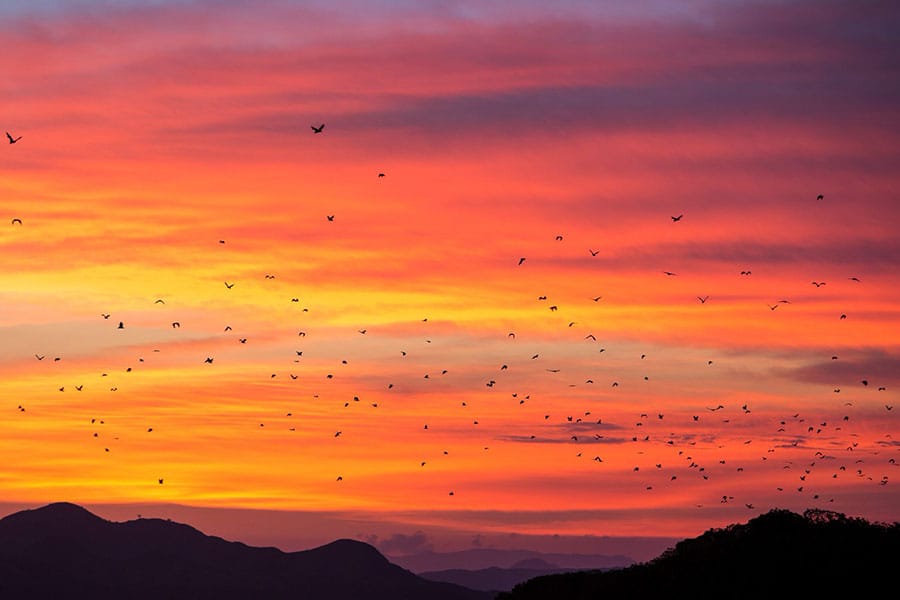
Kalong Island Bat Exodus is one of the most breathtaking wildlife experiences in Komodo National Park. Every evening, thousands of giant flying foxes suddenly emerge from the mangrove forests of Kalong Island and paint the sunset sky with dramatic silhouettes. While many travelers come to Labuan Bajo to see Komodo dragons or hike Padar Island, the mysterious bat exodus has become one of the most unforgettable moments of a Komodo sailing trip.
What Is Kalong Island Bat Exodus?
Kalong Island, or Pulau Kalong, is a small mangrove-covered island located inside Komodo National Park near Rinca Island. The word “kalong” means flying fox or giant fruit bat in Indonesian.
Unlike other islands in the region that attract visitors with hiking trails or beaches, Kalong Island is famous for something entirely different: thousands of fruit bats that use the island as their daytime home.
Throughout the day, these bats remain hidden among the dense mangrove trees. Most visitors arriving in the afternoon might not notice anything unusual.
However, once sunset approaches, the island transforms into one of the most spectacular wildlife attractions in Labuan Bajo.
Why Does the Kalong Island Bat Exodus Happen Every Evening?
The truth behind this phenomenon is surprisingly simple.
Flying foxes are nocturnal animals.
They spend the daytime resting and conserving energy before beginning their nightly search for food.
As temperatures become cooler and the sun starts to disappear below the horizon, the bats wake up and prepare for their journey.
At first, only a few individuals emerge from the mangrove canopy.
Then dozens.
Then hundreds.
Within minutes, thousands of bats fill the sky in what appears to be a massive migration.
This incredible event is known as the Kalong Island bat exodus, and it happens almost every evening.
Why Do Thousands of Flying Foxes Leave Kalong Island at Sunset?
Many visitors assume there is something mysterious behind the timing.
In reality, sunset offers several advantages for flying foxes.
Cooler Temperatures
The tropical heat during the day can cause excessive energy loss. Flying at sunset allows bats to conserve energy.
Protection from Predators
Many birds of prey are less active during dusk, making evening a safer time to travel.
Better Feeding Conditions
Many fruit-bearing trees release stronger scents during the evening, helping bats locate food more efficiently.
Natural Biological Rhythm
Flying foxes have evolved over thousands of years to become active at night. Their internal clocks naturally signal them to wake up around sunset.
What Kind of Bats Live on Kalong Island?
The stars of this remarkable phenomenon are large fruit bats, also known as flying foxes.
Despite their intimidating size, these animals are harmless to humans.
Characteristics of flying foxes include:
- Wingspan reaching up to 1.5 meters.
- Excellent eyesight.
- Strong sense of smell.
- Fox-like faces.
- Ability to travel long distances.
Unlike vampire bats often portrayed in movies, flying foxes feed exclusively on fruits, flowers, and nectar.
They do not drink blood.
Instead, they play a crucial role in maintaining tropical forests.
Why Do Flying Foxes Choose Kalong Island?
This question has puzzled many visitors.
Why would thousands of bats gather on such a small island?
Scientists believe several factors make Kalong Island the perfect home.
Dense Mangrove Forests
The thick mangrove vegetation provides ideal shelter.
The trees offer:
- Shade
- Protection from strong winds
- Comfortable temperatures
- Safe roosting spots
These conditions allow thousands of bats to rest peacefully during the day.
Natural Isolation
Because Kalong Island is surrounded by water, predators have limited access.
This natural isolation protects the colony from threats that exist on larger islands.
Strategic Location
Kalong Island sits close to Flores and neighboring islands where food sources are abundant.
Flying foxes can easily travel to nearby forests and fruit trees before returning to their island sanctuary before sunrise.
The Hidden Role Behind the Kalong Island Bat Exodus
Although many people associate bats with darkness and horror movies, the truth is far more extraordinary.
Flying foxes are among nature’s most important pollinators and seed dispersers.
Without them, many tropical forests would struggle to survive.
They Spread Seeds
After eating fruits, bats disperse seeds over large distances.
This process helps new forests grow naturally.
They Pollinate Flowers
As bats feed on nectar, pollen sticks to their fur and gets transferred between plants.
This allows flowers and trees to reproduce.
They Help Maintain Biodiversity
By supporting plant growth, flying foxes indirectly sustain countless species of birds, insects, and mammals.
For this reason, scientists often call them the gardeners of the rainforest.
Why Do They Fly in Huge Groups?
Watching thousands of bats flying together is truly mesmerizing.
But why do they travel in such massive numbers?
Social Behavior
Flying foxes are highly social animals that prefer living in colonies.
Safety in Numbers
Large groups reduce the chances of individuals being targeted by predators.
Efficient Feeding
Colonies can collectively locate food-rich areas more effectively.
Their synchronized movements create one of the most beautiful natural spectacles in Indonesia.
Local Legends Surrounding Kalong Island
Long before tourism arrived in Labuan Bajo, local communities had their own beliefs about the bats of Kalong Island.
Some fishermen considered the animals guardians of the mangrove forests.
Others believed disturbing the colony would bring misfortune at sea.
Older generations often viewed the bats as symbols of harmony between nature and humans.
Although these stories belong to local traditions rather than science, they demonstrate the deep respect local communities have for the ecosystem.
Why Kalong Island Is One of the Best Sunset Spots in Komodo National Park
Most travelers come to Komodo National Park to see dragons and hike Padar Island.
However, many visitors are surprised to discover that Kalong Island becomes one of their favorite memories.
The experience combines several elements:
Spectacular Sunsets
Orange, pink, and purple colors paint the sky over the Flores Sea.
Thousands of Flying Foxes
The silhouettes create dramatic scenes unlike anywhere else.
Traditional Phinisi Boats
Watching the bat exodus from a wooden boat adds a romantic atmosphere.
Peaceful Surroundings
No crowds.
No loud noises.
Only the sounds of nature and the calm sea.
Best Time to Witness the Kalong Island Bat Exodus
One of the advantages of Kalong Island is that the bat exodus occurs throughout the year.
However, some months offer better weather conditions.
April to October
These months are considered the dry season and provide:
- Clear skies.
- More colorful sunsets.
- Calm seas.
- Excellent visibility.
The best viewing time is usually between 5:30 PM and 6:30 PM.
Tour operators often schedule their boats to arrive just before sunset.
Can You Walk on Kalong Island?
Unlike Padar Island or Komodo Island, visitors are generally not allowed to walk on Kalong Island.
The mangrove ecosystem is extremely sensitive and serves as the bats’ natural habitat.
Instead, tourists observe the spectacle from:
- Phinisi boats.
- Speedboats.
- Liveaboards.
Watching from the sea actually enhances the experience because it offers panoramic views of both the sunset and the bat exodus.
Photography Tips for Capturing the Kalong Island Bat Exodus
To get the best shots:
Use Fast Shutter Speed
Flying bats move quickly, so a faster shutter speed helps freeze motion.
Shoot During Golden Hour
The warm colors of sunset create stunning silhouettes.
Include Boats in the Frame
Traditional phinisi boats add scale and atmosphere.
Use Burst Mode
Continuous shooting increases the chances of capturing dramatic moments.
Avoid Flash Photography
Flash can disturb wildlife and should always be avoided.
Conservation Challenges Facing Flying Foxes
Despite their ecological importance, flying fox populations around the world face increasing threats.
These include:
Habitat Loss
Deforestation and mangrove destruction reduce their natural shelter.
Hunting
In some regions, bats are hunted for food or traditional practices.
Climate Change
Extreme weather events can affect food availability.
Human Disturbance
Uncontrolled tourism can stress bat colonies.
Protecting Kalong Island and its mangrove forests is essential to preserving this extraordinary phenomenon for future generations.
Why Kalong Island Bat Exodus Is One of Komodo National Park’s Hidden Gems
Many travelers initially focus on famous attractions like:
- Padar Island
- Pink Beach
- Komodo Island
- Manta Point
- Taka Makassar
But after witnessing thousands of bats soaring into the sunset, many visitors realize that Kalong Island offers something equally unforgettable.
It is not just about photography.
It is not just about wildlife.
It is about experiencing one of nature’s oldest rhythms—a phenomenon that has likely occurred for thousands of years long before humans arrived.
Final Thoughts
The strange truth about Kalong Island’s sunset bat exodus is that there is no mystery at all.
Thousands of flying foxes emerge every evening because nature designed them to do so.
Their nightly journeys are essential for pollinating forests, dispersing seeds, and maintaining the delicate ecosystem of Komodo National Park.
Yet despite the scientific explanation, there is still something magical about watching thousands of silhouettes fill the sky while the sun slowly disappears over the Flores Sea.
For many travelers, this peaceful moment becomes one of the most unforgettable memories of their Komodo adventure.
If you are planning a trip to Labuan Bajo, don’t miss this hidden gem.
Because sometimes, the most extraordinary experiences happen when the sun goes down.